
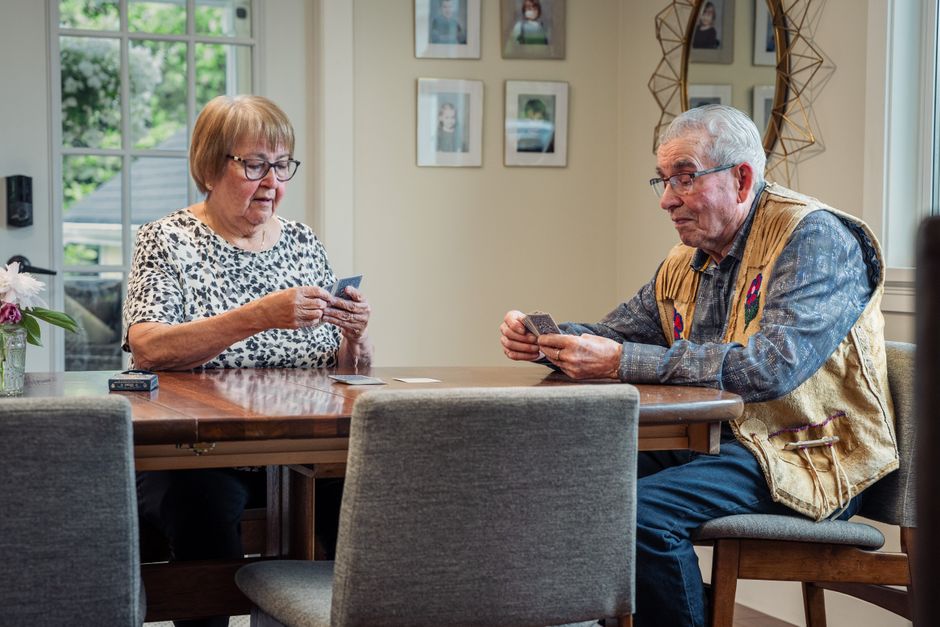
Assisted living can provide more than help with daily routines. For many older adults, it creates regular opportunities for conversation, shared activities, friendships, and family involvement—connections that may become harder to maintain when living alone.
Why social connection matters in assisted living
Regular social interaction supports emotional well-being and can help residents maintain a sense of purpose. Conversation, shared meals, group activities, and familiar faces give structure to the day and reduce the sense of isolation that some older adults experience at home.
Social connection may also encourage residents to stay engaged in everyday life. A person who has a planned activity, a neighbor to visit with, or a meal to share may be more likely to get dressed, leave the apartment, and participate in the community.
This does not mean every resident wants a busy social calendar. Healthy assisted living communities make room for both interaction and privacy. The goal is not constant activity. It is having accessible opportunities to connect when a resident wants companionship.
How does assisted living help residents meet people?
Assisted living makes social contact easier by placing common spaces, dining areas, and activities within a resident’s regular routine. Residents do not always need to arrange transportation, travel long distances, or wait for family members to visit before seeing other people.
Common connection points may include:
- Shared dining rooms where residents see familiar faces
- Lounges for conversation, reading, games, or television
- Group exercise, music, craft, or educational activities
- Outdoor seating areas and walking paths
- Holiday gatherings and seasonal events
- Informal visits between neighbors in nearby apartments
Repeated contact is especially valuable. Friendships often develop gradually through small conversations at breakfast, a weekly activity, or time spent sitting together in a shared area.
For residents in Strasburg, seasonal weather can also affect social routines. Cold temperatures, snow, rain, and shorter winter days may make it less appealing or less practical to leave home frequently. An accessible indoor community can help reduce the effects of weather-related isolation while still allowing residents to enjoy outdoor spaces during more comfortable seasons.
Can assisted living help someone who is shy or socially withdrawn?
Yes, but participation usually works best when it is gradual and voluntary. A resident who is shy, grieving, experiencing memory changes, or adjusting after a move may not feel comfortable joining a large group immediately.
Helpful first steps may include sitting near others during a meal, attending a small activity, greeting a neighbor, or speaking with a staff member in a quiet setting. Smaller groups are often less intimidating than crowded events.
Staff members can sometimes help residents discover shared interests. Two people may connect through gardening, local history, faith traditions, music, sports, cooking, or family experiences. These common points can make conversation feel more natural.
Social withdrawal should not automatically be treated as a personality preference. A sudden change may be related to pain, hearing difficulty, depression, medication effects, fatigue, grief, or confusion. If a resident who was previously engaged becomes unusually isolated, the change deserves thoughtful attention.
What types of activities encourage meaningful relationships?
Activities are most socially useful when they provide a reason to interact rather than simply filling time. A successful activity does not need to be elaborate. It should match residents’ abilities, interests, and comfort levels.
Examples include:
- Small-group card or board games
- Cooking demonstrations or shared baking
- Discussions about books, current events, or personal memories
- Music programs and sing-alongs
- Gentle exercise or stretching
- Gardening and seasonal planting
- Art, crafts, and hands-on projects
- Educational talks or skill-sharing sessions
- Intergenerational visits with children or younger adults
- Community celebrations connected to local traditions
Some residents prefer activities based on conversation, while others connect more comfortably through doing something together. A person who rarely speaks in a group may still form friendships while helping with a puzzle, arranging flowers, or listening to music beside another resident.
Meaningful connection also includes one-to-one interaction. A short visit from a neighbor, a private conversation with a caregiver, or a phone call with family may be more valuable to a resident than a large scheduled event.
How can families support social connections?
Family members can support connection by asking specific questions about a resident’s experiences rather than simply asking whether the person is “keeping busy.” Useful questions include:
- Who did you sit with at lunch?
- Was there an activity you enjoyed this week?
- Have you met anyone with similar interests?
- Is there a group that feels comfortable to you?
- Are there times when you feel alone?
Visits can be more engaging when they include a shared activity, such as looking through photographs, listening to familiar music, taking a walk, or playing a simple game. A visit does not need to be long to be meaningful, especially if the resident becomes tired easily.
Families should also recognize that relationships may take time. Moving into assisted living can involve grief, uncertainty, and changes in identity. A resident may need several weeks or months before feeling settled enough to form new friendships.
What if a resident prefers privacy?
A preference for quiet time is not necessarily a problem. Some people enjoy living independently and may have little interest in organized activities. Others prefer a few close relationships rather than frequent group interaction.
A balanced community should respect a resident’s right to privacy while ensuring that social opportunities remain available. Signs that a resident may be comfortable include choosing quiet activities, maintaining regular routines, communicating preferences, and showing interest in selected people or subjects.
Concern is more appropriate when isolation appears unwanted or is accompanied by sadness, anxiety, confusion, poor appetite, sleep changes, or a loss of interest in activities that were previously enjoyable.
How do memory changes affect social participation?
Memory loss can make social situations more difficult, but it does not eliminate the need for companionship. Residents with cognitive changes may benefit from predictable routines, familiar activities, clear instructions, and smaller groups.
Activities that rely on long-term memories, music, movement, or hands-on participation can be easier than activities requiring quick recall. Staff and family members can help by avoiding embarrassment, allowing extra time for responses, and focusing on the resident’s abilities rather than correcting every mistake.
A welcoming social environment should make room for repetition. Someone may ask the same question several times or forget a recent conversation, yet still enjoy the comfort of familiar company.
How can residents maintain connections outside the community?
Assisted living does not have to replace existing relationships. Phone calls, video conversations, letters, visits, and shared outings can help residents remain connected with family and friends.
Transportation and mobility may affect how often a resident can participate in activities beyond the community. In a rural or small-town setting, distance, road conditions, and limited public transportation may require more planning, especially during winter weather. Family members may need to coordinate visits around daylight, driving conditions, and the resident’s energy level.
The strongest social support usually combines several forms of connection: new friendships with neighbors, regular contact with family, familiar staff relationships, and opportunities to remain involved in interests that mattered before the move.
What should families look for when evaluating social support?
Families can ask practical questions about daily life, including:
- Are activities offered throughout the week or only occasionally?
- Are there options for small groups and quiet participation?
- Can residents eat with others or choose private dining?
- How are new residents introduced to the community?
- Are outdoor areas accessible in different seasons?
- How are residents with hearing, vision, mobility, or memory changes included?
- What happens when someone stops attending activities?
- Can family members participate in suitable events?
The most useful measure is not the number of activities listed on a calendar. It is whether residents can find consistent, respectful opportunities for genuine connection at a pace that fits their personality, health, and interests.
